
We need to communicate the same message to all of our customers so that they don’t get confused. This means that some elements need to be standard across all markets to preserve our brand image but due to differences in languages, cultures and beliefs, some elements need to (or should be) customised for specific markets.
Standardising products keeps producing prices down for businesses whereas customising can be rather expensive. Although it can be costly, customising allows for a more direct marketing approach towards a certain target market because you can tailor the marketing mix to fit their wants and needs.
Ocho’s goals for expanding to Buenos Aires are to be seen as a luxury chocolate brand, to maintain profitability and to be consumers’ first choice when purchasing luxury chocolate.
Ocho could consider changing the packaging to match Buenos Aires extremely creative and artistic nature/culture but the more simplistic approach tends to be considered more luxurious.
Chocolate in Buenos Aires is already much more expensive than it is in New Zealand. At supermarkets, chocolate prices are 30-35% higher than in New Zealand.
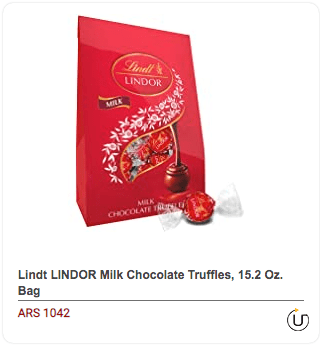
Lindt, which is also a luxury chocolate brand, can be purchased from an online Argentine distributor for ARS$1042 (approximately NZD$26) which means that if Ocho wants to be seen as a luxury brand in Buenos Aires, they will either have to match Lindt’s prices or decide to be seen as more of an everyday brand and standardise the price (NZD$10, ARS$391). These prices are quite standard for chocolate in Buenos Aires.
Because “Ocho” means 8 in Spanish, this may lead the Buenos Aires market to think that it is a Spanish (or Spanish speaking country) brand. Ocho could add “Otago Chocolate” to their packaging for the Buenos Aires market, but this could be an expensive adaptation.
Ocho should customise the language on their packaging to Spanish for the Buenos Aires market. Majority of the Buenos Aires population are highly educated but their national language is Spanish. Food being sold in Buenos Aires requires a Spanish ingredients label and slapping a Spanish ingredients sticker on top of our standard packaging is probably not considered luxury.
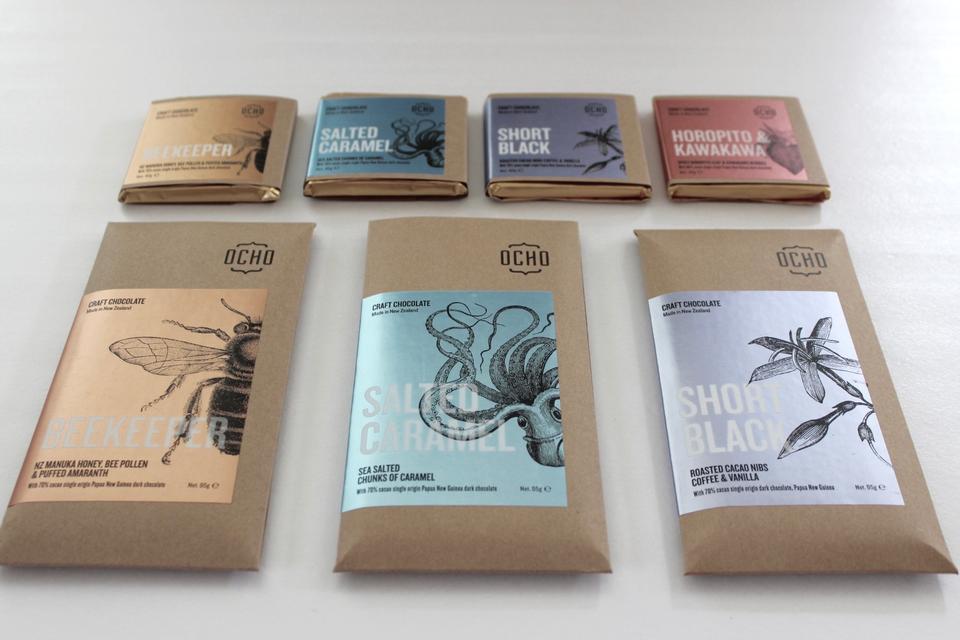
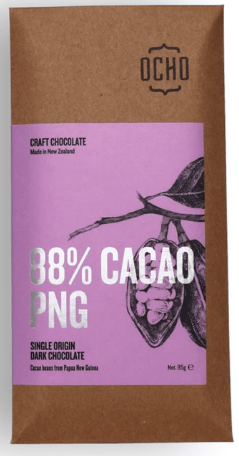
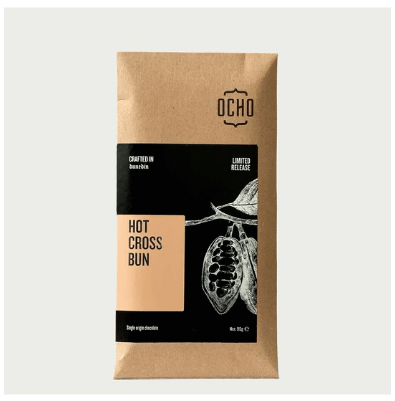
The last customisation I would suggest Ocho make is to change the colours on their “Short Black” packaging, their “88% Cocoa PNG” packaging and their “Hot Cross Bun” packaging. This is because the colour of these flavours packaging are black and purple which as previously stated, means death and funerals in Argentine culture.
 Ochoblog